This guide explains how to choose Latest Phones 2026 smartphones while also understanding U.S. government phone program options for qualifying households. It reviews major Lifeline/ACP-supported providers, outlines eligibility and application steps, and compares included services versus potential add-on costs. Background context covers how these programs fit into today’s mobile ecosystem and what to verify before applying.
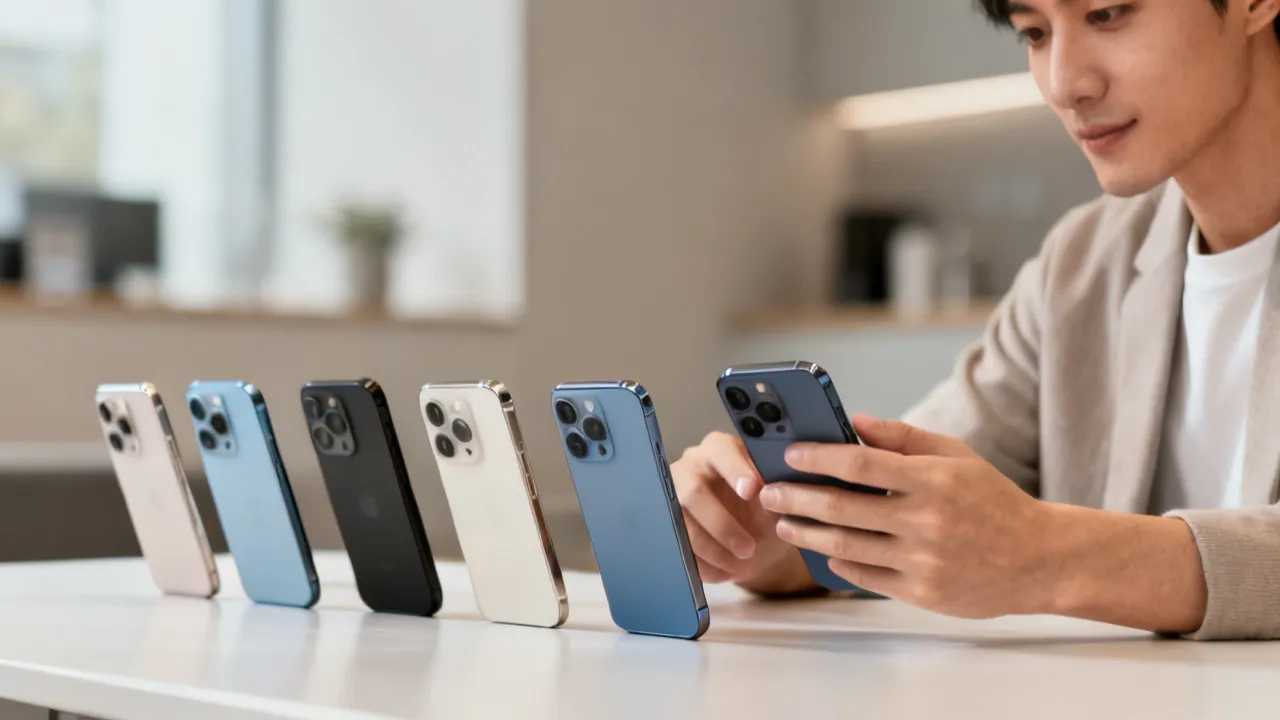
For many buyers, “Latest Phones 2026” is about more than specs—it’s about building a reliable connectivity plan without straining the monthly budget. The very practical approach is to evaluate (1) the handset class you want for 2026-era performance and (2) whether a government-supported wireless program can reduce upfront costs. Below, you’ll find an objective comparison of major Lifeline/ACP-aligned providers and the typical services included, followed by eligibility conditions and an application workflow you can follow step by step. This guide also helps you connect “phone planning” (what device you want) with “program planning” (what rules you must follow), because those two pieces often determine whether you end up with a satisfying 2026 experience or an avoidable disappointment.
When people search for Latest Phones 2026, they usually start with hardware questions: better processors, improved cameras, brighter displays, smoother performance, longer battery life, and more reliable software updates. But affordability is the other half of the story. A device that looks great on paper might still be financially out of reach without subsidies, installment plans you can’t comfortably maintain, or trade-in offers that require you to own a phone in good working condition. Government-supported connectivity programs are designed to reduce the cost barrier for eligible households. The most successful buyers don’t treat these programs as an afterthought—they treat them as a planning constraint that can influence the type of phone they can obtain, the data amount included, and the best way to structure their monthly usage.
In other words: you’re not just picking a phone—you’re building a plan for how you’ll use your phone throughout 2026. This involves choosing the right device “baseline” (so the phone won’t feel obsolete quickly), then choosing a service tier (so your everyday tasks work reliably), and finally making sure your application materials and eligibility rules align with what the provider needs.
By 2026, mainstream phone expectations tend to cluster around faster mobile data experience, smoother app performance, better camera processing, and longer software support cycles. Many people also care about things that don’t always show up in spec charts: consistent Wi‑Fi calling, reliable hotspot performance, stable GPS for navigation, dependable voice quality in everyday environments, and fewer “lag spikes” when switching apps or using maps. However, device affordability remains a key adoption constraint. Government-backed wireless programs (commonly structured under Lifeline and—where applicable—ACP benefits) are designed to help eligible households maintain essential connectivity for voice, messaging, and everyday data usage. While the exact device model and allowances can vary by provider and region, the core value is consistency of eligibility-based service and transparent documentation requirements.
From an industry perspective, the decision often breaks down into two questions:
This guide treats those questions separately, then helps you connect them through eligibility and plan comparison. The key idea is that “Latest Phones 2026” isn’t only about the device you’d buy if money were no object. Instead, it’s about what you can realistically achieve within the available subsidy model: choosing a phone that’s modern enough for 2026 daily use and selecting a service plan that doesn’t break your routine when data is limited.
To do that effectively, you also need to understand what “government-supported wireless” typically includes and what it does not include. Generally, these programs help with service affordability and may include handset availability. But they are not identical to standard retail plans with unlimited premium data tiers and frequent device upgrades every year. Some plans include limited high-speed data, some include data that slows after a threshold, and some include allowances tied directly to eligibility benefit structure. Knowing those differences early helps you plan your “real-world connectivity behavior”—for example, how often you stream video or upload large photos over cellular rather than Wi‑Fi.
The following table summarizes the provider websites referenced in this article and compares the typical services included in their government-supported phone offerings, along with common categories where additional package costs may apply. Because government program details can change by state and plan type, use this as a structured starting point for verification on the provider’s own site.
| Official provider website | Typical government-supported services included | Potential extra package costs (common categories) |
|---|---|---|
| SafeLink Wireless | Unlimited talk and text; data allowance that can vary by plan/state; handset option or BYOD option | Upgrades to premium devices; potential extra data or premium feature add-ons |
| Assurance Wireless | Affordable Android smartphone option; unlimited talk and text; data allowance (amount may vary) | Optional upgrades such as additional high-speed data or international calling services |
| StandUp Wireless | Affordable smartphone or BYOD options; unlimited talk and text; data plans with allowance variations | Premium phone upgrades; extra data packages |
| Access Wireless | Unlimited voice and text; limited high-speed data tied to government benefits (Lifeline/ACP alignment) | Data boosts; device upgrades (fee-based) |
| True Wireless | Government-supported phone eligibility with voice and data plans; device and plan details depend on qualification | Optional upgrades to better devices; additional data plans |
Source of information:
SafeLink Wireless: https://www.safelinkwireless.com
Assurance Wireless: https://www.assurancewireless.com
StandUp Wireless: https://standupwireless.com/
Access Wireless: https://www.accesswireless.com
True Wireless: https://www.gotruewireless.com/
(Note: These are official provider websites. The table above summarizes the cited program types and service categories described there.)
Because eligibility rules drive both the service and the device availability, it’s essential to treat this section as a checklist rather than a guess. Below are the conditions and common documentation patterns described for Lifeline and ACP-aligned programs, followed by a step-by-step application approach. The practical goal here is to minimize the risk of delays, denials, or “partial approvals” that result from mismatched documents or incomplete submissions.
While each provider may administer verification slightly differently, eligibility commonly aligns with one or more of the following categories:
It’s also wise to consider timing. Eligibility verification often depends on whether your benefits/income records are current. If your eligibility has changed recently—such as a new Medicaid start date, a SNAP recertification, or a recent benefit approval—your verification record might take time to update in the systems used for telecom program checks. Planning for that “paper-to-system update window” can prevent frustration when you submit an application quickly but your record hasn’t fully propagated yet.
Another practical point: many applicants worry that they must have all documents printed and signed before applying. Usually, you can complete the process with digital uploads or scanned copies, but you should prepare the information in advance so the form doesn’t stall halfway through. Taking the time to confirm that the names, addresses, and ID numbers you enter match exactly across forms is one of the most effective ways to avoid administrative delays.
Even if you eventually focus on Latest Phones 2026 devices, start by confirming whether you qualify for government-supported wireless assistance—because eligibility can determine whether you receive a subsidized handset, a service plan with specific allowances, or BYOD options.
Industry insight: Applicants who approach this as a document workflow—rather than a “try and see” request—reduce delays. Because verification can be sensitive to mismatched names, outdated eligibility records, or incomplete uploads, accuracy matters as much as eligibility. If you change your legal name or have a spelling variation between documents (for example, “Sara” vs. “Sarah” or “Johnson” vs. “Johnsen”), you should expect more difficulty unless the provider can reconcile the discrepancy.
To make the workflow smoother, consider gathering the following before you begin:
If you’re comparing Latest Phones 2026 options, it helps to distinguish between “device capability” and “network/service experience.” Many buyers assume a phone’s raw specs automatically translate into better everyday use. In practice, performance is a combination of chipset capability, modem support, supported bands, software optimization, and the data allowance characteristics of the plan.
In addition, 2026-era daily use may not look like it did in previous years. People often rely on:
So, the “best phone” for your life is the one that stays responsive when you actually use it under typical conditions. That includes weaker signal areas (basements, rural edges, or indoors), and it includes how your plan handles speeds after an allowance threshold.
When choosing a “Latest Phones 2026” experience under a subsidy, you may not get the absolute highest-end chipset. That’s okay if the device class you select is still within a modern range for update support, adequate RAM/storage, and strong day-to-day performance. The best plan is the one that reduces frustration rather than maximizing theoretical power.
For anyone considering a BYOD path through a government-supported program, compatibility is a key gating factor. Confirm whether your phone model is compatible with the plan’s network and the plan’s provisioning requirements. If the provider offers a handset option, the compatibility risk is usually lower—but model availability can be narrower.
Compatibility often involves more than just “does it support 4G or 5G.” It can include:
If you bring your own device, it’s helpful to confirm your phone’s compatibility using the provider’s BYOD checker (if available) or by contacting customer support before submitting your application. Waiting until after you’re approved can turn a quick process into a longer one.
Government-supported plans often include data allowances that may be limited in speed or quantity. This affects streaming quality, navigation behavior, and download times. For practical planning, consider your “high-data” activities (video streaming, cloud backups, large photo uploads) and decide whether to reduce them, schedule them for Wi‑Fi, or choose a plan tier that aligns with your habits.
For example, two people can choose the same handset class and have very different experiences because of service settings and usage patterns. If you frequently stream video on cellular, your experience may feel inconsistent when the plan applies reduced speeds after a threshold. If your usage is mostly messaging, maps, and music streaming at moderate levels (or when connected to Wi‑Fi), you may find the allowance adequate even if it isn’t “unlimited premium data.”
When comparing plans, pay attention to these plan behavior details:
While the earlier comparison table provides a high-level view, an expert application strategy involves checking provider-specific details before you submit anything. These details can include which handset tiers are currently available, what data allowance applies for your address, whether BYOD activation is supported, and how plan features (like hotspot or international calling) are defined.
Below are provider-focused notes. Treat them as guidance for what to verify—then confirm the current specifics on each provider’s official website or during the application flow.
SafeLink Wireless typically describes government-supported eligibility options that can include unlimited talk and text and a data allowance that varies by plan/state. The provider also commonly references scenarios where additional costs may apply for upgrades to premium devices or additional data packages. Applicants should verify the exact device tier offered for their eligibility status and the plan parameters tied to their address.
Before choosing SafeLink, consider verifying:
If your goal is “Latest Phones 2026” comfort—smooth UI, modern Android experience, reliable updates—verify the device class being offered. Sometimes the “latest” experience under a subsidy may correspond more to the software generation than to flagship hardware.
Assurance Wireless commonly references an Android smartphone option alongside unlimited talk/text and data allowances. If you plan to keep your budget tight while pursuing a better camera or smoother UI experience, verify whether the offered device tier for eligible applicants aligns with what “Latest Phones 2026” means for you (often, “recent Android experience” rather than flagship-level cameras).
Before selecting Assurance, confirm:
A subtle but important point is that “Android smartphone” is not a guarantee of modern performance. Two Android phones can share a basic Android label but have different RAM/storage and different update policies. If your use includes many apps, frequent camera usage, or heavy messaging media, RAM and storage matter for long-term smoothness.
StandUp Wireless typically highlights unlimited talk and text with data plan variations, plus smartphone or BYOD paths. If BYOD is important for you—because you already own a device closer to the Latest Phones 2026 baseline—confirm network compatibility and plan provisioning steps ahead of time.
When planning a BYOD strategy, verify:
Even if a phone is unlocked, some activation systems still require it to match specific device profiles. Doing this validation early reduces the risk of a “successful approval but failed activation.”
Access Wireless commonly describes unlimited voice and text, plus limited high-speed data aligned with Lifeline and ACP benefits. If your priorities include mapping navigation, app updates, or general browsing, review the allowance definitions. Also check whether data boosts are available and what the cost structure looks like, so you can plan around potential usage spikes.
For “Latest Phones 2026” comfort under constrained data, Access plans can still work well if you manage data-heavy tasks. Consider verifying:
If your phone will be used for navigation daily, you may find that GPS itself uses relatively little data compared to streaming directions in high-definition video. But you still want enough allowance for maps refresh and search results. Planning for your most frequent app categories can help you choose a plan tier that won’t feel limiting.
True Wireless typically references government-supported phones and voice/data plans with qualification-driven availability. If you’re comparing across providers because you care about “Latest Phones 2026” feel (fast UI, modern updates, better display), treat device selection as a variable you’ll need to confirm during application, not something you can assume from the provider name alone.
Before committing to True Wireless, check:
A helpful approach is to decide your “must-have” features first. For instance: reliable software updates for security, enough storage to avoid constant app cleanup, and a battery that doesn’t degrade your day. Then, select the plan that supports those goals with the least financial risk.
Many households make an unbalanced choice—either focusing only on the newest device, or only on subsidized service. A more stable approach is to separate the decision:
Then test your workflow: can you do your daily tasks reliably on the plan’s included allowances? If not, consider optional upgrades (where available), using Wi‑Fi for data-heavy activities, or selecting a different provider offering a better allowance profile.
In practice, this framework can prevent common pitfalls:
To apply this framework, you can build a simple “monthly usage estimate”:
You don’t need perfect math. Even a rough estimate is better than choosing a plan based on “unlimited” marketing alone. Government-supported plans often still provide “unlimited voice/text,” and “data included” but at defined speeds/amounts.
One reason the phone search can feel confusing is that the availability of “Latest Phones 2026” models may not map neatly to your ideal purchase timeline. Government-supported handset inventories may change. Providers might offer a limited range of device models within certain eligibility tiers. That can mean you may not receive the exact phone you expected—especially if you apply at a time when a newer model has temporarily limited stock.
To manage this uncertainty, you can create a “device acceptance list.” Instead of targeting a single model, define a range of acceptable devices based on your non-negotiables. For example:
This strategy helps you stay aligned with the “latest phones” goal without becoming disappointed by the exact model. Your goal should be a stable user experience through 2026 and beyond—not necessarily a specific retail model name.
Another planning factor is how your plan affects your ability to upgrade later. Some providers offer fee-based device upgrades. If you anticipate that you might want a better camera or faster performance after you get comfortable with the plan, look into:
Understanding these upgrade mechanics can shape your initial device selection. For instance, you might choose a “middle tier” phone now and plan a paid upgrade later if needed. Or, you might decide that investing in a more capable handset at the start reduces future costs and frustration.
Eligibility is only one part of the process. Many applicants experience delays because administrative verification fails or takes time due to documentation mismatches. You can improve your odds by treating the application like a careful data submission.
Before you submit, check:
If you’re applying using enrollment-based benefits (e.g., Medicaid, SNAP, SSI), you should also make sure your enrollment records are current. If you recently moved, verify that your benefits record is updated with your new address. Some systems may still associate you with an older household record, causing verification delays.
Also, consider how you respond if the provider requests follow-up documents. Some approvals are contingent on completing a verification step. If you ignore a request or miss a deadline, you might need to reapply. So check email/phone messages regularly during the verification window.
If you’re uncertain about which documents are required for your specific situation, start by visiting the provider’s site and locating the “apply” or “eligibility” section. Many providers show a clear checklist. If they don’t, their customer support may still be able to guide you on what you need to upload. The key is to avoid submitting incomplete documentation hoping the system will accept it anyway.
Once you’re approved and activated, your job isn’t done. For a “Latest Phones 2026” experience, the phone must be correctly provisioned so that data, voice, and messaging work reliably. Sometimes activation works on paper, but specific settings like APN configuration, Wi‑Fi calling, or network mode require adjustment.
As soon as you receive your handset or activate BYOD, do these checks:
These steps matter because a phone that is “capable” can still feel unreliable if provisioning isn’t correct. If you notice issues, contact support early rather than waiting weeks.
No. Government-supported programs typically provide eligibility-based handset options or BYOD choices, but the specific handset models and device tiers available to qualified applicants can differ by provider, plan structure, and inventory. You should verify the exact models offered during the application process. “Latest phones” is often interpreted as “modern device experience available within the program,” which may vary from what you’d buy at retail.
Many providers describe BYOD options in addition to handset availability. However, eligibility programs still require verification, and BYOD success depends on phone compatibility with the provider’s network and the plan’s provisioning requirements. Always confirm compatibility before assuming your device will activate smoothly. If possible, use the provider’s activation checker or contact support with your phone model number.
Commonly, applicants must provide proof of income or proof of enrollment in qualifying programs (such as Medicaid, SNAP, or SSI), along with identification details required by the provider. Exact document types can vary by provider and state. It’s important to upload legible copies with correct names and dates. If you apply online, ensure the upload completes successfully and that you submit all requested pages.
Lifeline and ACP are distinct federal consumer support frameworks. Providers may offer plans that align with one or both, and service details (including data characteristics) can reflect which benefit is applied. You should confirm your benefit type during application. Also, if you’re expecting a specific data allowance, confirm that your enrollment includes the correct benefit combination.
Verify: (1) your eligibility category, (2) the correct documents and their completeness, (3) that your information matches exactly across documents, (4) the plan/device details shown for your address and eligibility, and (5) any optional upgrade costs you might encounter. If you see multiple plan choices, read the details about high-speed data, hotspot rules, and any restrictions—because those determine your real-world experience more than the handset name alone.
Often, yes, but you should resolve the cause of denial first (for example, incorrect documents or mismatch in eligibility information). Check the provider’s guidance for appeal or re-submission procedures. If you receive a denial notice, read it carefully. A small error—like a mismatch in address numbering or an outdated benefits letter—can cause denial even when you are otherwise eligible.
Approval is not guaranteed. Outcomes depend on verification results and program rules, and availability of handset tiers can vary. Always refer to the provider’s official requirements for the very accurate determination. Some approvals may grant service but not include a preferred device tier, depending on eligibility and available inventory.
For readers who want to verify program frameworks and consumer support context, the following sources can provide additional background on U.S. Lifeline and ACP program structures and how eligibility-based telecom assistance is administered.
1) The above information comes from online resources, and the data is as of October 2023. 2) This website cannot guarantee that applicants will definitely get a government affordable phone. For specific application requirements and how to obtain it, please refer to the official requirements of the provider. This website will not be updated in real time.
Striking the Perfect Balance: Navigating Premiums and Out-of-Pocket Expenses in Senior Insurance Plans

Explore the Tranquil Bliss of Idyllic Rural Retreats

How to Make Lasting Memories at Disneyland Attractions

Affordable Phones and Plans for Seniors

Affordable Full Mouth Dental Implants Near You

Unlock the Top Kept Secrets to Finding Your Ideal Dentist for Flawless Dental Implant Results!

Discovering Springdale Estates

Unveiling RS Sul Telecom Services

The Guide to Car Trading

Affordable Phones and Plans for Seniors
Discover the top deals on new phones and plans tailored for seniors, including discounts on 5G technology and unsold models.
Affordable Cell Phones Without Plans
Discover affordable cell phones for sale without plans, exclusive discounts for seniors, and tailored mobile plan options in your area.

Navigating Government Phone Programs
This guide provides an expert analysis of government-supported phone programs for eligible individuals, offering insights into available providers and their services. Affordable phones are often a necessity for individuals under economic constraints, aiding in communication, job searches, and access to emergency services. The article delves into eligibility criteria, application processes, and compares popular service providers in various regions.
Unlocking the Top Cell Phone Deals
Discover unbeatable cell phone discounts, plans, and offers for seniors and iPhone enthusiasts without contracts.
Navigating Affordable Phone Offers
Discover the essential details about government-assisted phone programs aimed at providing budget-friendly devices to eligible individuals. These programs offer complementary mobile phones and services to qualified beneficiaries, ensuring connectivity at minimal expense. This guide breaks down how to access such benefits and what conditions apply.
How to Apply for a Affordable Phone
This guide provides insights on how to apply for a affordable phone through government-sponsored programs. Understanding how these programs operate and their eligibility requirements is essential. These initiatives aim to support individuals in low-income households or those enrolled in specified government assistance programs by providing basic communication tools.
