This guide explains how Delfos Telematics supports fleet visibility, driver-safety monitoring, and operational decision-making. It presents objective background on how telematics systems collect vehicle data, how suppliers integrate hardware with platforms, and what organizations typically evaluate—such as reliability, data governance, and workflow fit—before adoption.
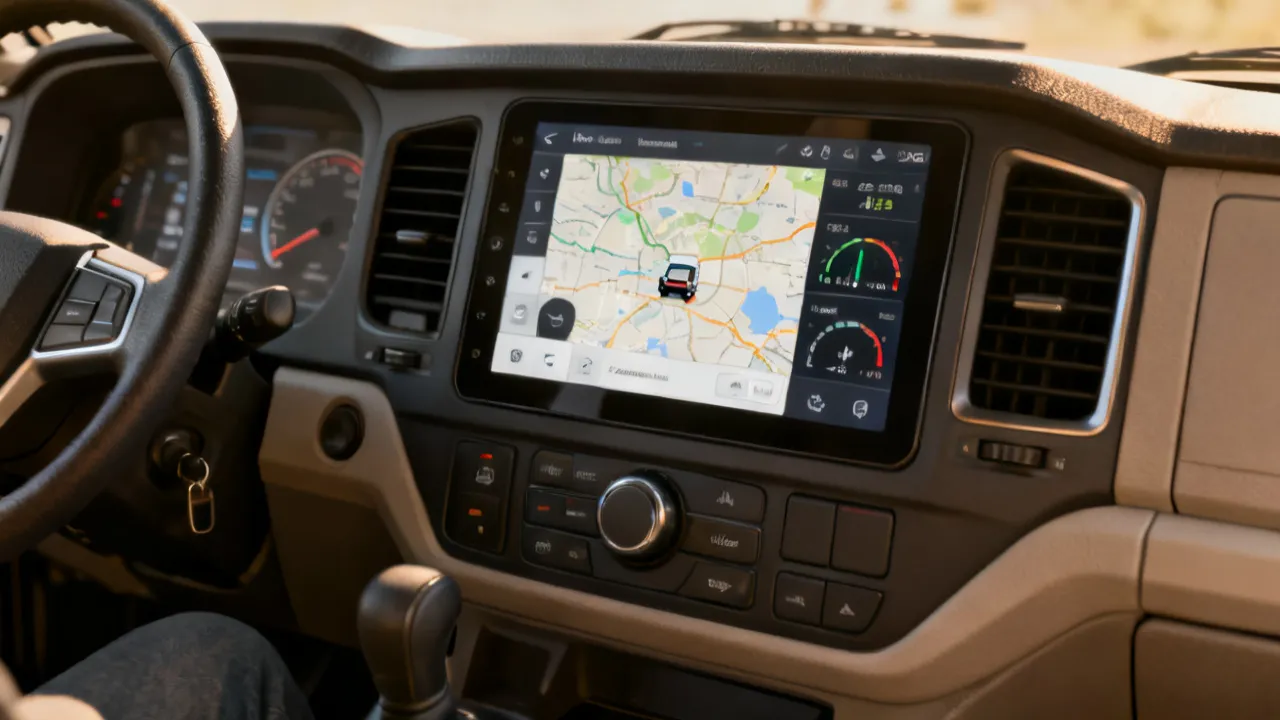
Telematics has moved from “nice-to-have” tracking to a core operational tool for organizations that need measurable control over vehicles, drivers, and real-world utilization. Delfos Telematics is designed for exactly that: translating movement and engine/vehicle signals into structured insights that can be used by fleet managers, operations teams, and compliance stakeholders. When deployed thoughtfully, the system can help you improve route planning, reduce avoidable downtime, standardize driving behaviors, and build audit-ready records of vehicle activity.
From an industry expert perspective, the key is not merely collecting data, but ensuring that the data pipeline is trustworthy, the dashboards match real workflows, and the implementation minimizes friction for drivers and supervisors. In this guide, you’ll find an expert-led, objective overview of what telematics typically delivers, how Delfos Telematics fits that model, and how to evaluate deployment requirements before going live.
It’s also worth emphasizing that “fleet performance” is not a single KPI. For many organizations, performance means a balanced set of outcomes: service reliability, safety, cost control, regulatory compliance, asset health, and predictable capacity planning. Telematics becomes meaningful when it supports those outcomes with evidence you can act on—rather than producing reports that are too noisy, too late, or too hard to interpret.
Finally, while the technology can appear straightforward—device, network, platform—the operational reality is more complex. Vehicle fleets differ by geography, vehicle types, driver habits, maintenance practices, job scheduling discipline, and even shift structures. A system like Delfos Telematics matters because it is configured to these realities and because it can create a shared, consistent understanding of what is happening on the road. That shared understanding is the foundation for measurable improvements.
Telematics generally combines onboard sensing (for example, GPS position, ignition/engine status, and diagnostic signals depending on vehicle type) with communications to transmit that data to a central platform. The platform then processes the signals into operational outputs—such as trip history, event logs, driving metrics, and maintenance-relevant flags.
While specific capabilities differ by manufacturer and integration scope, telematics programs usually aim at three outcome categories:
In reputable deployments, data governance and integration design are as important as the device itself—especially when teams require consistent reporting for management review, incident investigation, or regulator-facing documentation.
To ground expectations, consider the difference between raw telemetry and operational intelligence. Raw telemetry is the device’s stream of data: GPS coordinates, engine state changes, diagnostic trouble codes, and other signals. Operational intelligence is what your organization can do with that stream: verify a route against a schedule, determine whether an asset showed warning signs before a failure, and create evidence for internal audits. A mature telematics solution therefore includes a layer that standardizes definitions (such as what constitutes a “trip”), validates data quality, and produces outputs that are consistent across vehicles and time.
Additionally, telematics implementations often involve multiple stakeholders beyond fleet operations. Risk and compliance teams may need audit logs and retention policies. Maintenance teams may need diagnostic signals and service triggers. Customer operations teams may care about delivery punctuality and appointment adherence. When all these stakeholders share one telematics platform, performance conversations tend to become more objective—because everyone references the same underlying activity record.
For fleet operators, the practical value of Delfos Telematics generally depends on how the solution is configured to your fleet’s operating model. Typically, organizations start by mapping their needs—visibility, safety monitoring, maintenance scheduling, or cost control—then align the platform’s reporting and alerting with those needs.
Below are the very common “practical outcomes” that fleets seek when implementing telematics. Consider these as evaluation lenses rather than promises:
When Delfos Telematics is deployed with appropriate policies (for example, clear driver communication, escalation paths, and fair review processes), it can support daily decision-making rather than becoming a back-office tool that nobody uses.
What many organizations learn after their initial rollout is that “value” often comes from a few well-designed routines. For example, instead of asking users to explore dashboards ad hoc, successful teams implement recurring processes: morning dispatch checks, exception review meetings, weekly maintenance triage, and monthly performance reviews by route, vehicle class, and driver segment. Telematics becomes performance-critical when it is embedded into these routines.
Another practical point: you should expect configuration effort. Even when hardware is installed quickly, effective utilization generally requires setting thresholds, defining event interpretations, aligning trip boundaries, and tuning dashboards. Without this, the platform can still display data, but teams may struggle to turn it into decisions.
In addition, expect that “first insights” may not be perfectly aligned with reality on day one. During early weeks of operation, teams often discover mismatches between what the organization calls a “stop,” what the device logs as a “pause,” and what dispatch considers “on time.” Successful deployments refine these interpretations during or shortly after pilot operations.
Fleet telematics has gained traction as businesses seek to manage dispersed operations more efficiently. Many fleets face simultaneous pressure: service commitments, cost controls, safety expectations, and increasing requirements for accountability. Reputable research and industry bodies commonly describe telematics value as emerging from improved operational planning and reduced inefficiencies—rather than from any single feature alone.
For example, the International Transport Forum (ITF) under the OECD framework has published work on how data and digital tools can support safer and more efficient road transport. In addition, the European Commission has funded and published guidance on digitalization and road transport data practices. These sources collectively emphasize that quality, governance, and usability determine whether telematics delivers operational benefits.
Source pointers (for further reading): ITF/OECD publications on transport digitalization and road safety; European Commission research and policy documents related to transport data and smart mobility initiatives.
Beyond policy frameworks, the business case for telematics is often driven by measurable “waste” that becomes visible only when you can compare intended operations to actual execution. Common examples include excessive idling caused by route inefficiencies, missed appointment windows leading to rescheduling costs, preventable breakdowns from late maintenance triggers, and increased accident risk from repeated harsh-driving events. Telematics helps organizations quantify these inefficiencies and then design targeted countermeasures.
There is also a human factor: fleets may have relied on informal reporting—what drivers said happened on shift, or what dispatch remembered. That approach is workable for small fleets but becomes unreliable at scale. Telematics can create a shared baseline of evidence that reduces disputes and makes operational improvement programs more credible.
Finally, investments in telematics are increasingly aligned with broader digital transformation initiatives: ERP integration, maintenance management systems, digital customer portals, and mobile workforce tooling. In that context, Delfos Telematics can be viewed as a “data foundation” layer that feeds other systems rather than as a standalone tracker.
A frequent mistake is to assess telematics primarily by device specs. Industry top practice treats the entire solution as a system: hardware performance, network communication reliability, platform usability, reporting accuracy, cybersecurity approach, and user governance.
When considering Delfos Telematics, evaluate through four priority areas:
If these areas are addressed early, the implementation usually proceeds more smoothly and adoption tends to be higher.
To further strengthen evaluation, many professional teams also test operational scenarios rather than static capabilities. For instance: can dispatch review an active incident in minutes? Can maintenance quickly find the relevant vehicle history around a failure? Can management export a report for a specific date range without data mismatches? Can the platform support the internal dispute-resolution process when event timestamps are questioned?
Evaluating “system reliability” also includes thinking about communications gaps. A fleet may travel through areas with weaker connectivity, use underground parking, or operate in environments where signals vary. The best solutions handle these realities by ensuring buffering where appropriate, accurate timestamping, and clear messaging about data completeness. In practice, this means you should ask how the platform behaves during connectivity dropouts and how it resolves delayed data uploads.
Another overlooked area is user interface clarity. If dashboards are difficult to understand, the value decays quickly. Fleets should assess whether KPIs are defined clearly (and consistently), whether filters are intuitive, and whether users can move from overview to evidence without time-consuming steps.
Telematics becomes very valuable when deployed against real operational use cases—areas where teams already spend time or face recurring friction. Below are commonly targeted use cases, described in a neutral way:
For organizations operating near busy logistics corridors, industrial zones, or urban delivery areas, the “nearby” geography matters primarily in how teams interpret route dynamics and shift planning—not in any assumption of automatic performance outcomes. Local context often shapes priorities such as traffic constraints, job stop density, and scheduling discipline.
It can also be helpful to break down use cases into “operational rhythms.” For example, dispatch verification typically supports day-to-day scheduling. Idling review supports process improvement over days or weeks. Safety trend monitoring supports coaching cycles and training follow-ups. Maintenance signals support planning and risk reduction before failures. When these rhythms are clear, telematics outputs can be prioritized accordingly, preventing the platform from overwhelming users with too many real-time alerts that don’t map to operational actions.
Some fleets also use telematics for customer-facing reliability outcomes—such as providing proof of service, confirming arrival/departure times, or supporting service-level agreement (SLA) investigations. Where these are objectives, it’s important that the platform’s event timestamps align with business definitions used in customer contracts. Misalignment can create disputes even if the underlying telemetry is accurate.
Additionally, telematics can support fuel cost management, especially where fuel is monitored alongside engine events or where driving patterns correlate with efficiency. However, fuel management is rarely just “telemetry provides fuel consumption.” In real operations, fuel consumption depends on vehicle type, load weight, route topography, driving style, and maintenance condition (e.g., tire pressure, engine health). Professional teams use telematics as part of a broader efficiency program, correlating signals and validating results through operational checks.
Telematics pricing is rarely uniform because solutions scale with the number of vehicles, integration complexity, reporting scope, support level, and deployment services. For Delfos Telematics, procurement discussions typically should clarify the following commercial aspects—so you can compare like-for-like offers from suppliers and avoid surprises later.
Because you may see different “supplier details” presented in proposals, treat each supplier’s scope as a distinct offering. Request a written statement of work (SOW) defining deliverables, acceptance criteria, and training responsibilities.
To make procurement safer, request pricing that separates capital-like components (such as hardware purchase) from recurring subscription services. Also clarify whether costs change as you scale (e.g., adding vehicles later), whether you can temporarily pause service for certain fleets, and how contract renewals work. A mature commercial approach reduces the risk of budget drift after rollout.
You may also want to clarify data ownership and export rights. In professional deployments, teams often require the ability to export historical data for audit purposes, migration planning, or integration changes. Ensure the contract documents what data is accessible, how long it is retained, and what formats are available for export.
Finally, ask about support model specifics: Who is responsible for first-line troubleshooting (your IT team, the supplier’s field team, or the telematics helpdesk)? What happens when an issue is ambiguous—data discrepancies, unusual events, or missing logs? Clear support responsibilities prevent slow problem resolution that can erode user trust.
Before switching on Delfos Telematics across a fleet, ensure that operational, technical, and organizational conditions are satisfied. This reduces the risk of fragmented reporting, driver dissatisfaction, or incomplete data capture.
In many mature deployments, teams introduce clear documentation: what the system tracks, what it does not track, and how disputes or corrections can be managed.
In practical terms, vehicle readiness also includes verifying whether vehicles can share necessary signals. Some vehicles may require more complex installation to access engine/diagnostic data. Others might not support certain data fields at all. Planning for this early prevents confusion later when stakeholders ask why some vehicles show richer telemetry than others.
Technical readiness includes defining integration endpoints if you plan to connect telematics data to other systems. Even if integration is not an initial requirement, you should anticipate whether future needs will arise: linking to a maintenance management platform, connecting to an HR system for training compliance reporting, or feeding data into a data warehouse for advanced analytics.
Organizational readiness includes training not only “how to view dashboards,” but “how to act” on them. For example, if the system flags excessive idling, who reviews it? Is it automatically a coaching issue, or is it first validated against route conditions and shift tasks? A lack of action ownership leads to alert fatigue and lowers adoption.
The table below rephrases the key adoption points as a structured comparison of decision factors. It does not list links.
| Decision Factor | What to check | Why it matters |
|---|---|---|
| Implementation scope | Hardware installation, configuration, onboarding, and user training deliverables | Defines whether the platform becomes usable quickly or remains underutilized |
| Data quality controls | How trip boundaries, timestamps, and event definitions are validated | Improves trust in dashboards and reduces false alarms |
| Governance and permissions | Role-based access, retention approach, and audit-friendly reporting | Supports accountability and internal compliance requirements |
| Operational workflow fit | Whether dispatch, maintenance, and management can consume the outputs | Determines adoption and day-to-day value |
| Support and escalation | How device or platform issues are handled; expected response behavior | Reduces downtime risk and supports continuity of operations |
To make this table even more useful internally, fleets often convert each “what to check” into a concrete acceptance test for the pilot. For example: “Trip boundaries must align within a defined tolerance to operational trip start/stop definitions” or “Missing data must be flagged clearly with a completeness indicator.” Such acceptance tests reduce subjective debates after rollout.
Below is a practical, step-by-step guide for deploying a telematics program—framed around common professional practices and the typical operational expectations for Delfos Telematics deployments.
Professional implementations often add two additional preparatory steps that complement the process above:
These additions reduce misunderstandings. For example, if “idle” is defined by one threshold (e.g., engine on but speed below X for Y minutes), stakeholders might interpret it differently from how drivers explain delays. When definitions are agreed and documented, discussions become more fact-based.
During pilot operations, it’s also advisable to run “test cases” deliberately. Teams can simulate scenarios such as unusual parking conditions, brief ignition cycles, or scheduled job exceptions. The goal is not to “game” the system but to verify that the platform behaves consistently under edge cases that occur in everyday operations.
Finally, responsible rollout includes monitoring adoption and data integrity after scaling. Many teams focus on the initial go-live date, but operational maturity is achieved when the platform continues to produce reliable data under changing seasonal conditions (weather effects, route changes, vehicle assignment changes) and after organizational changes (new dispatch practices, driver turnover).
Telematics is powerful, but responsible interpretation matters. An industry risk is turning telemetry into overly deterministic conclusions. For instance, “driving event frequency” can reflect route complexity, road conditions, job urgency, training effects, or workload variations—not only driver behavior.
To avoid misinterpretation, professional teams typically:
Applied correctly, Delfos Telematics outputs can support coaching and operational refinement rather than “gotcha” surveillance.
A useful way to interpret telematics is to separate three types of insight:
Telematics excels most reliably in verification and pattern insight. Attribution may require additional data sources: driver statements, incident reports, route context, maintenance logs, and—where available—external data like traffic patterns or weather conditions.
Another interpretive risk relates to threshold tuning. If you set event sensitivity too low, you will generate excessive alerts that drown out meaningful signals. If you set it too high, you might miss important safety events or maintenance warnings. Responsible deployments treat threshold settings as part of the operational learning process. During the pilot, stakeholders should compare the alerts to real incidents they already know about and then tune thresholds to reduce false positives and false negatives.
In addition, remember that telematics data completeness can vary. A vehicle that experiences frequent connectivity gaps might show fewer events, but the absence of events may be a data capture artifact rather than an operational improvement. Governance policies should include how completeness is handled in dashboards—so that users do not mistakenly interpret “missing data” as “no activity.”
Adoption often succeeds or fails based on human factors. Even the top platform can underperform if drivers feel surprised by monitoring or if supervisors can’t translate data into actionable steps.
In professional rollouts, you’ll usually see:
If your fleet operates with a strong “local culture” of driving—such as regional driving styles, shift traditions, or job-specific routes—treat those as inputs to configuration and training materials. In other words, align the solution to the fleet’s everyday reality rather than expecting staff to adapt to vague assumptions.
Driver adoption can be improved by establishing a transparent “review ladder.” For example:
This structure helps drivers understand what to expect when events occur and reduces perceptions of surprise or unfair discipline. It also ensures that the system supports safe improvement rather than generating punitive misunderstandings.
Supervisor adoption is equally important. Supervisors need “translation skills”: not everyone can interpret raw telemetry. Training should cover how to read dashboards, how to drill down from KPIs into evidence, and how to compare performance across similar routes or shifts. Without that, supervisors might focus on simplistic metrics and miss the operational context that explains variations.
Another adoption element is feedback on usability. Dispatch teams may struggle with too many filters or confusing exception categories. Maintenance teams may need data grouped by vehicle and downtime windows. Management teams may want scheduled reports. A responsive supplier and a flexible configuration approach can make the platform align with these preferences.
Finally, adoption should include documentation and support. When drivers ask, “Where is this data coming from?” or “How is an event classified?” you need an answer. When dispatch asks, “Why did this trip split?” you need data quality explanations. When maintenance asks, “Does this code correspond to that component?” you need diagnostic mapping or clear guidance. Preparing these answers reduces frustration and strengthens trust in the platform.
Delfos Telematics is used to collect and process vehicle-related telemetry data and present it in operational formats that support fleet visibility, event tracking, and decision-making. Exact features depend on configuration and vehicle integration.
In practical terms, fleets often use telematics outputs to validate daily execution (where the vehicle was, when it was active), to identify operational exceptions (unusual idle periods, ignition events, or route anomalies), and to support planning (maintenance scheduling and capacity forecasting). The system’s usefulness depends on whether these outputs are mapped to real workflows and defined goals.
Start by defining 2–4 operational goals (for example, improved dispatch verification, reduced avoidable downtime planning, or better safety coaching workflows). Then compare pilot results against those goals using success criteria you define before rollout.
To strengthen value evaluation, compare both operational outcomes and process outcomes. Operational outcomes include improvements in on-time performance, reduced idle time, fewer breakdowns, or lower incident frequency. Process outcomes include reduction in time spent investigating discrepancies, faster maintenance triage, and fewer disputes between dispatch, drivers, and management. Telematics often improves performance indirectly by making internal coordination faster and more evidence-based.
No. While GPS position and route history are common outputs, telematics programs often include ignition/engine status signals, event logs, and maintenance-relevant indicators depending on vehicle capability and integration scope.
Additionally, some deployments include derived metrics (such as trip duration, dwell time, or event frequency over a period). Derived metrics can be extremely valuable, but their reliability depends on the underlying definitions (how start/end points are detected, how events are categorized, and how missing data is handled). That’s why evaluation should include definition review, not just data display.
Request a written scope for per-vehicle subscription pricing, installation/onboarding services, support expectations, reporting features, user roles, and any integration or customization work. Ensure the proposal states what is included and what is billed separately.
It’s also useful to request “total cost clarity” for different scaling scenarios: what happens if you add vehicles mid-contract? what if you remove or reassign vehicles? what if installation requires extra vehicle adapters? Contracts that don’t address scaling assumptions can create budget surprises and slow expansion plans.
Typical requirements include vehicle compatibility verification, connectivity and installation planning, governance decisions for permissions and retention, and training for dispatch and management users so that data becomes actionable.
Many fleets also prepare an internal “exception playbook” before deployment. An exception playbook answers: what is an exception category, who receives alerts, how to validate context, and what corrective actions should follow. This reduces the risk that alerts become noise or that teams interpret exceptions differently.
Yes, many fleets use telematics to support safety initiatives and coaching programs. However, use should be governed by clear internal policies and fair review practices to ensure accurate interpretation and responsible application.
Coaching programs are most effective when they focus on teachable patterns. For example, supervisors might select a small number of event types that can be improved through targeted training (e.g., smoother acceleration or better speed management in predictable zones). Coaching should also include positive reinforcement and supportive feedback rather than only corrective actions.
Pilot timelines vary by fleet size, vehicle diversity, and onboarding complexity. A controlled pilot typically focuses on validating data quality, dashboard usability, and workflow integration before scaling.
In practice, pilots often require enough time to capture multiple route cycles and operational conditions (different shift times, varied routes, and at least some seasonal weather variation if feasible). A very short pilot might confirm device installation but fail to validate whether event thresholds and interpretations work across the full variety of daily operations.
Telematics often involves operational and location-adjacent data. Responsible deployments typically define role-based access, retention practices, and audit trails, and they align driver communication with internal HR or legal guidance.
Privacy planning should also consider who can view data at what granularity. Some organizations choose to limit driver-level event detail visibility to specific roles or specific review contexts. Others implement time-limited visibility windows during coaching cycles. The right approach depends on local legal requirements, company policy, and workforce agreements.
Device installation correctness, connectivity conditions along routes, consistent interpretation of event definitions, and disciplined configuration are common factors that influence how reliable and comparable the reporting becomes over time.
Data quality can also degrade if installation is inconsistent across vehicle types or if the fleet experiences frequent hardware replacements without standardized configuration. A robust configuration management process should ensure that new or replacement devices inherit the same event definitions, thresholds, and reporting settings as the original fleet devices.
At a professional level, Delfos Telematics should be treated as an operational capability—one that earns its value through reliable data, governance-ready workflows, and practical adoption by dispatch, maintenance, and management teams. If you approach the procurement and rollout process with clear goals, validated integration, and fair-use policies, telematics can become a consistent contributor to performance improvement rather than a passive monitoring tool.
When you’re ready to proceed, the very effective next step is to structure a pilot around real routes, define success criteria upfront, and ensure that the supplier scope—hardware, configuration, support, and onboarding—is explicitly documented. That disciplined approach is often what separates “successful installation” from “measurable operational transformation.”
To maximize long-term value after rollout, plan for continuous improvement. Telematics programs typically mature through cycles: analyze results, refine thresholds and dashboards, adjust governance rules based on feedback, and integrate with additional business workflows as internal readiness grows. When this iterative approach is adopted, Delfos Telematics can evolve from a deployment project into an ongoing performance system that supports safety, reliability, and cost efficiency across your fleet.
Ultimately, the most effective fleets treat telematics as evidence for decision-making. That means teams ask better questions, validate assumptions, and create accountability mechanisms that are fair and transparent. In that environment, telematics data becomes not just measurable, but trustworthy—and fleet performance improvements become sustainable rather than temporary.
Striking the Perfect Balance: Navigating Premiums and Out-of-Pocket Expenses in Senior Insurance Plans

Explore the Tranquil Bliss of Idyllic Rural Retreats

How to Make Lasting Memories at Disneyland Attractions

Affordable Phones and Plans for Seniors

Affordable Full Mouth Dental Implants Near You

Unlock the Top Kept Secrets to Finding Your Ideal Dentist for Flawless Dental Implant Results!

Discovering Springdale Estates

Unveiling RS Sul Telecom Services

The Guide to Car Trading

Unveiling RS Sul Telecom Services
RS Sul Telecom emerges as a prominent entity in the telecommunications industry, providing reliable services across various regions. This article delves into the offerings of RS Sul Telecom, the benefits it presents to both individual and business clients, and its impact on the modern telecom landscape.

Understanding Rlock Advpl in Business
Rlock Advpl represents a pivotal advancement in business software solutions, offering enhanced security and efficiency for enterprise resource planning systems. This article delves into the intricacies of Rlock Advpl, its application in modern businesses, and the benefits it offers in streamlining operations and safeguarding data. As an expert tool, Rlock Advpl is essential for businesses looking to optimize their IT infrastructure.

Unveiling Atranet Innovation
Atranet represents a cutting-edge concept in networking technology. Harnessing its capabilities can transform digital communication by providing seamless connectivity. Designed to optimize data transfer, security, and efficiency, Atranet is shaping the future of how we connect and share information. This article delves into its structure, applications, and potential impacts on industry practices and consumer experiences.

Understanding Polysulfide Adhesive Applications
This comprehensive guide explores the applications and benefits of polysulfide adhesive, highlighting its unique properties and widespread use in construction, aerospace, and automotive industries. Known for its flexibility and resistance to various environmental factors, polysulfide adhesive is a key component in sealing and bonding applications, providing durability and reliability in demanding conditions.
Comparing Vtex with Salesforce Commerce
This article provides an in-depth comparison between Vtex and Salesforce Commerce, two leading digital commerce platforms. Each offers unique features suited to different business needs. Vtex is renowned for its collaborative commerce approach, while Salesforce Commerce shines with its comprehensive customer relationship management capabilities. Explore their differences, strengths, and insights from industry experts.

Understanding the Latest Chrome Version
This article delves into the intricacies and features of the latest Chrome version. Chrome, developed by Google, is one of the very popular web browsers globally, known for its speed, simplicity, and security features. Each update aims to enhance user experience through improved functionality and performance. Understanding these updates is crucial for both everyday users and developers.
