Vehicle Availability is the deciding factor behind cost, timing, and service quality in car rentals. This guide explains—objectively—what “availability” means, how it’s managed across suppliers, what conditions affect inventory, and how to plan around demand and lead times. You’ll also find a comparison-style checklist, step-by-step sourcing guidance, and practical FAQs to reduce uncertainty.

When you’re arranging a rental, Vehicle Availability determines whether you can secure the right class, at the right pickup time, with the service conditions you need. In practice, availability is not a single number—it’s a continuously updated picture shaped by inventory, reservations, supplier policies, seasonal demand, and operational constraints. This guide explains the concept in a grounded, decision-oriented way so you can evaluate options and plan confidently.
Vehicle rentals often feel simple on the surface: you select dates, choose a vehicle class, pay, and drive away. But the reliability of that experience is built on internal operational math happening well before you arrive at the counter. Vehicle Availability is the bridge between what the website suggests and what the branch can actually hand to you when you’re ready. The fastest route to fewer delays is to understand that bridge—what it depends on, what it does not guarantee, and how you can use it to reduce uncertainty without spending hours researching every possible detail.
Vehicle Availability refers to the portion of rental inventory that is actually available for booking during a specific window (pickup date/time through expected return). Unlike a simple “in stock” signal, availability reflects multiple layers of the rental supply chain, including fleet status (in-service, reserved, under repair), staffing and logistics (pickup readiness, vehicle staging), and contractual rules (mileage limits, age requirements, deposit handling, and permitted usage).
In real-world operations, availability is closer to a dynamic contract than a static label. Even if a vehicle exists somewhere in the supplier’s network, it may not be “available” for your selected time because it is assigned to another reservation, not yet cleaned, still in inspection after a prior return, or restricted by policy for your rental type or location.
From an industry perspective, availability is top understood as a forecast plus constraints. Forecasting comes from booking history, known demand cycles, and planned fleet downtime. Constraints come from real-time operations—vehicles returning late, inspections taking longer than expected, or maintenance schedules slipping. Good suppliers constantly reconcile these variables to update availability without overstating confidence.
It also helps to understand that availability is often computed at different levels: the supplier may know that a “compact car” class will be available, even if the specific model on the website may not. That’s why the practical question is not only “is something available?” but “is the right thing available under the conditions that matter to me?”
Availability directly influences the rental price you see and the vehicle you ultimately receive. When inventory is tight—such as weekends, holiday periods, or event-driven spikes—suppliers often restrict selection to fewer models or charge higher rates to balance demand. Conversely, when inventory is healthy, you may see more options across vehicle classes, more flexible pickup windows, and fewer substitutions.
Even when pricing is displayed transparently, the total experience can differ. For example, two rentals with similar base rates can diverge if one involves a more constrained pickup time or a narrower selection due to limited inventory. In the rental industry, those differences matter as much as the sticker price. A “deal” that results in a substitution or a delay can cost you time, convenience, and sometimes money (for example, if you miss a check-in at a hotel, a tour start time, or an onward booking).
Vehicle availability also affects fit in less obvious ways. Consider these examples:
In short, availability impacts both what you get and how confidently you can plan to use it immediately.
Vehicle availability is shaped by a set of factors that can be grouped into inventory readiness, booking dynamics, and rules that govern whether a reservation converts into a real handover at pickup. Understanding these levers helps you interpret why availability changes and what actions you can take.
It’s easy to blame the website for availability changes. But the underlying truth is usually operational: something changed in the supply chain, not in the consumer interface.
Suppliers may present availability at the point of search, but a responsible evaluation requires understanding what “available” guarantees. Ask whether availability is for:
To avoid surprises, you also want to understand the operational meaning of confirmation. In many rental workflows, confirmation can mean “your reservation request is accepted,” but final readiness is still conditional on:
For top outcomes, align your plans with the supplier’s inventory practices. If you need a specific vehicle feature set (automatic transmission, child seats, cargo capacity, or roof racks), confirm whether those features are tied to the vehicle class or only “top matched.” In practical terms, that means you should confirm whether your essential needs are included in the guarantee language or only implied by the category.
When essential features are involved, treat category-level flexibility as a risk. Category substitution may solve the transportation problem but not the comfort, safety, or usability problem.
In mature rental ecosystems, suppliers manage Vehicle Availability using a mix of real-time booking systems and operational controls. The availability you see is updated as reservations are confirmed, modifications are processed, and fleet vehicles change status. Because cancellations can happen—especially around busy travel patterns—availability can improve after you book, or it can tighten if another customer’s change request is approved.
Importantly, cancellation policies also interact with availability. If a supplier has strict cancellation cutoffs, the inventory is protected longer, meaning vehicles remain assigned and predictable. If cutoffs are short, inventory can fluctuate more aggressively. This is one reason “search now” may not equal “guaranteed later.”
Another subtle factor is how suppliers handle overbooking. Some industries use overbooking to reduce revenue loss from no-shows. Rental suppliers may reserve inventory with assumptions about cancellation behavior. When travel patterns deviate from assumptions (for example, widespread flight delays or sudden event changes), the practical result can be a stronger substitution or delay risk.
In general, your safest planning strategy is to assume that availability is strongest when:
The table below offers a practical comparison framework. It does not include external links; it focuses on decision criteria you can apply directly when comparing offers.
| Evaluation Area | What to Look For | Why It Matters for Vehicle Availability |
|---|---|---|
| Inventory Guarantee | Exact model vs. category vs. comparable substitution | Determines how likely you are to receive the right fit during tight demand |
| Pickup Time Certainty | Confirmed time slot vs. flexible arrival window | Late arrivals and staging delays can affect the final vehicle readiness |
| Real-Time Updates | How quickly availability reflects cancellations or changes | Reduces surprises when inventory shifts close to pickup |
| Change and Cancellation Terms | Cutoff times and fees for modifications | Impacts whether your plan remains stable if circumstances change |
| Documentation Requirements | License checks, age bands, and deposit authorization rules | Incomplete verification can prevent conversions from “available” to “confirmed” |
| Operational Constraints | Cleaning and inspection windows; repair exclusions | Explains why some listings may narrow closer to pickup |
| Extra Features Availability | Child seats, GPS, EV charging adapters, additional drivers | Feature availability may be separate from vehicle class inventory |
| Location Allocation | How vehicles are positioned by branch or depot | Different pickup points can have very different stock levels |
When comparing offers, don’t treat all “availability” signals equally. A supplier that guarantees only a category may appear similar to one that guarantees a model, but the difference can be decisive during peak demand. A small textual difference in guarantee language can translate into a significant difference in your pickup experience.
Below is a step-by-step approach designed to minimize uncertainty. It assumes you want a vehicle that fits your requirements, not merely a booking number.
Availability outcomes depend on practical conditions. Consider the following common requirements:
If you’re organizing pickup in a busy, near-urban environment (for example, near a downtown transport corridor or near a high-footfall business district), the pattern of Vehicle Availability typically follows commuting rhythms and event schedules. In many cities, demand peaks around:
Because supply chains route vehicles to high-demand zones, pickup branches in central areas may experience faster inventory turnover than branches on the outskirts. Even without naming a specific location, the operational principle holds: higher footfall increases the probability of constrained selection close to pickup.
From a decision perspective, this means you should consider location strategy as part of availability planning:
Even without citing exact prices (which vary by dates and contract terms), you can interpret pricing signals responsibly. In general:
To keep decisions objective, compare offers by aligning the same category, same pickup time, and the same condition set (mileage, insurance-equivalent coverage, add-ons). Otherwise, you might confuse pricing for availability with pricing for policy differences.
It’s also important to recognize that pricing can be influenced by factors that don’t necessarily represent availability—for example, promotional pricing, membership discounts, or different coverage bundles. So a low price is not automatically a “tight availability warning,” and a high price is not automatically a “guarantee problem.” The goal is to read pricing alongside the guarantee language and the modification terms.
If you want a simple but effective approach: treat price as a context signal, not the main decision variable. Your main decision variables should be inventory guarantee level, pickup time certainty, documentation conversion risk, and substitution policy.
Vehicle rental availability is influenced by macro-level travel and vehicle fleet dynamics. While specific figures can vary across markets and years, reliable research consistently links rental inventory health to travel demand and fleet turnover. For methodological context, industry analyses often reference fleet utilization and travel demand patterns. For example, global tourism monitoring from the UN World Tourism Organization (UNWTO) and travel indicators compiled by the World Bank provide context for demand cycles that can translate into rental pressure. At the operational level, rental suppliers manage availability using booking systems and fleet status tracking—an approach described broadly across transportation and mobility industry practices.
Source suggestions for further objective context: UNWTO tourism monitoring (demand cycles and visitation trends) and World Bank transport/travel indicators.
Beyond macro demand, you can also think in terms of “capacity buffering.” Fleet suppliers are constantly balancing available vehicles against real-world downtime, repair needs, seasonal tire changes, and staffing patterns. When the system is well-buffered, availability appears stable. When buffers shrink, availability becomes sensitive—meaning small changes in return time, weather, or booking volume can affect what customers see during the final days before pickup.
To make the concept concrete, consider several scenarios that commonly illustrate how Vehicle Availability impacts experience. These are not hypothetical extremes; they reflect typical rental workflows.
You book a “compact car” class for Saturday morning. The website shows availability and you confirm. On pickup day, the branch may have a compact category but only a specific variant remains. If your reservation is category-based and substitution is allowed, you may receive a different model than expected. If your essential needs involve features not guaranteed (for example, a specific infotainment system, automatic transmission, or a particular cabin size), the substitution becomes a usability issue, not just an inconvenience.
You choose a confirmed pickup time slot. Yet, if cleaning and inspection are running behind due to late returns, the branch may temporarily slow down handovers. In some cases, the vehicle is ready but a compliance check (or paperwork) takes longer. Your “availability” is not false, but operational constraints can still produce short delays.
The rental website shows a vehicle available, but at pickup the required verification step fails. For example, deposit authorization may not go through or your license requires additional ID documentation. In this scenario, “availability” is not the problem—conversion is. Still, the effect on you is similar: you might lose time and face a replacement process that depends on real-time stock.
You book a vehicle category that can include family features. But child seats may be limited in quantity. If the supplier treats child seats as separate inventory, your vehicle might be ready while the add-on is not available at pickup. This can lead to delays or require a different vehicle class that carries the add-on.
These scenarios show why a customer should evaluate availability as a system: vehicle inventory plus operational readiness plus conversion rules plus add-on coverage.
It typically indicates that a vehicle in the stated class/category is expected to be ready for your time window, subject to supplier conditions (verification, pickup process, and operational readiness). The guarantee level varies: exact model matching is usually stricter than category-based rentals.
If your booking terms distinguish between “reserved” inventory and “available for top match,” pay attention to the wording. Reservations generally indicate stronger allocation, while “top match” can be more flexible and more vulnerable to last-minute substitutions.
Availability updates as other reservations are confirmed, cancellations occur, vehicle status changes (return delays, maintenance, cleaning), and branch inventory is reallocated. Even short time gaps can produce different availability results.
Another common reason is that your own actions can trigger availability reevaluation. Some suppliers hold inventory temporarily while you’re in the checkout flow, and the system releases those holds if you don’t complete booking quickly. That means refreshing the page later can show different counts.
You can rely on substitutions only to the extent the supplier’s policy allows. If your needs are feature-specific (e.g., automatic transmission or specific seating), confirm whether the category substitution still satisfies your requirements.
A helpful mindset: if the substitution changes something you truly need (safety seats, transmission, cargo capacity), treat it as a risk to be managed—not an assumption you can ignore.
Yes. Inventory is distributed across depots and branches. Two pickup points in the same city can have different stock levels and different staging schedules, producing different availability and selection outcomes.
When possible, compare the same rental across multiple nearby pickup points—not just the cheapest location. Sometimes a slightly different pickup point produces dramatically better availability because the depot has better buffering or less saturation at your pickup time.
In peak periods, earlier booking generally improves the chance of locking your preferred class and time. However, “how early” depends on the local demand cycle and your flexibility on vehicle class and pickup timing.
As a practical rule, the closer you get to peak demand, the more availability becomes sensitive. Booking earlier reduces the chance that late operational changes remove your category from the allocation pool.
Common issues include license format mismatches, insufficient age eligibility, incomplete identity verification, and payment authorization that cannot be processed. These can prevent conversion from listing to confirmed rental.
To reduce risk, double-check that your name matches your payment method and identification documents. Even a small discrepancy can slow down verification processes, which can indirectly affect whether your vehicle is staged quickly.
Not always. Features like child seats, navigation devices, or toll equipment can be limited and may require separate availability checks or prebooking requests.
If add-ons matter, treat them as their own availability problem. Ask whether add-ons are guaranteed in your specific pickup location for your date/time window, not only included at purchase.
Follow the supplier’s on-site process: request an inventory check, ask for a documented replacement or alternative category that meets your minimum requirements, and confirm any compensation or procedural steps under their terms.
Also keep your priorities clear. If you need the vehicle to arrive at a schedule (e.g., a wedding, a tour, a pickup at a different location), communicate urgency politely but clearly so staff can prioritize staging options.
Extensions depend on subsequent availability and the supplier’s schedule. If the next reservation is already locked to that vehicle, extension may shift you to a different category or require an operational handoff.
When extensions are possible, ask whether extension is based on the original category or whether you could be shifted to a substitute. If you need the exact features, confirm that the extension keeps those features or offers alternatives.
Select a narrower requirement set (e.g., specify exact category and critical features), choose pickup times with buffer, verify policy terms for substitution, and consider an alternate class or backup pickup window.
Additionally, choose pickup times that align with operational capacity. A pickup right at the start or end of busy branch hours can increase the chance that staging constraints affect your handover.
Most renters focus on what they can book. A more resilient approach focuses on what the supplier can reliably execute. When you think like an operator for a moment—how inventory gets staged, cleaned, inspected, and handed over—you can make small adjustments that significantly improve outcomes.
Here are practical tactics to plan for Vehicle Availability at a deeper level.
Identify what you cannot miss. For example:
Once you define the critical points, you can choose the rental option that best protects them—often meaning paying slightly more for stronger guarantee language or choosing a pickup window with better staging confidence.
Availability can be stable when the reservation remains unchanged. But when you modify dates or times close to pickup, you may shift from a protected allocation to an open inventory pool—where substitution and readiness variability increase. If your schedule is uncertain (flight delays, late meetings), plan to reserve with buffer or with a flexible pickup strategy rather than relying on last-minute changes.
A pickup location is not just a convenience; it’s an inventory channel. Some depots may have more frequent replenishment or better buffering for peak demand. If the supplier offers multiple nearby pickup points, compare them with the same category and pickup time. Your goal is not to find the cheapest option; it’s to find the channel most likely to have your needs staged.
Child seats, GPS units, toll tags, EV charging adapters, and even additional drivers can be managed as separate resources. A supplier may have a vehicle ready but not have the add-on in the correct quantity. When add-ons are required, ask whether they are guaranteed and whether the guarantee is tied to your pickup branch for your date/time window.
Substitution rules can be vague in a web listing, but the terms and conditions can be more precise. Look for language about:
This matters because your experience depends on whether the substitute preserves your functionality, not just your transportation.
A backup plan can be as simple as choosing one alternate class that still meets your critical needs. For example, if you need cargo capacity, choose a backup class with similar or greater cargo space. If you need automatic transmission, choose a backup class that consistently offers automatic in that market.
But the key is “actionable.” Your backup should be something you can switch to quickly without losing time. That often means identifying your backup during the initial booking stage.
Many rentals fail to convert not because the vehicle is unavailable, but because verification takes too long or fails. Make sure:
Faster verification can improve the probability that your vehicle is staged immediately, particularly at high-demand branches.
Effective Vehicle Availability planning is less about chasing the lowest displayed rate and more about aligning your needs with the supplier’s inventory logic and policies. By evaluating guarantee levels, pickup time certainty, documentation requirements, and substitution rules—then pairing that with a clear step-by-step approach—you reduce uncertainty and improve the likelihood of receiving the vehicle that truly fits your trip.
If you’re comparing offers, treat availability as a decision variable: confirm conditions, review change/cancellation terms, and ensure any feature requirements are covered under the category you’re booking. This disciplined approach helps you move from “it shows available” to “it will work for my schedule.”
In the end, the fastest route to fewer delays is not speed at checkout—it’s clarity about what availability means for your specific needs, your specific pickup location, and your specific timing window. When those factors align, rental day becomes predictable, and the vehicle you planned for becomes the vehicle you drive.
Striking the Perfect Balance: Navigating Premiums and Out-of-Pocket Expenses in Senior Insurance Plans

Explore the Tranquil Bliss of Idyllic Rural Retreats

How to Make Lasting Memories at Disneyland Attractions

Affordable Phones and Plans for Seniors

Affordable Full Mouth Dental Implants Near You

Unlock the Top Kept Secrets to Finding Your Ideal Dentist for Flawless Dental Implant Results!

Discovering Springdale Estates

Unveiling RS Sul Telecom Services

The Guide to Car Trading


How to Evaluate Vehicle Availability with Confidence
This guide explains how to assess Vehicle Availability across dealers and fleets, so you can plan purchases or rentals with fewer surprises. “Vehicle Availability” reflects how quickly specific models can be reserved, delivered, or serviced based on inventory, sourcing, and lead times. Learn what to verify, how to compare suppliers, and which conditions affect availability decisions.

Understanding Vehicle Availability for Smart Fleet Decisions
This guide explains how vehicle availability shapes fleet operations, from sourcing to scheduling and maintenance planning. It provides objective background on key terms like inventory flow, lead times, and supply-side constraints, then translates them into practical decision criteria. You’ll also find a structured comparison, step-by-step evaluation conditions, and expert FAQs to support procurement discussions with confidence.
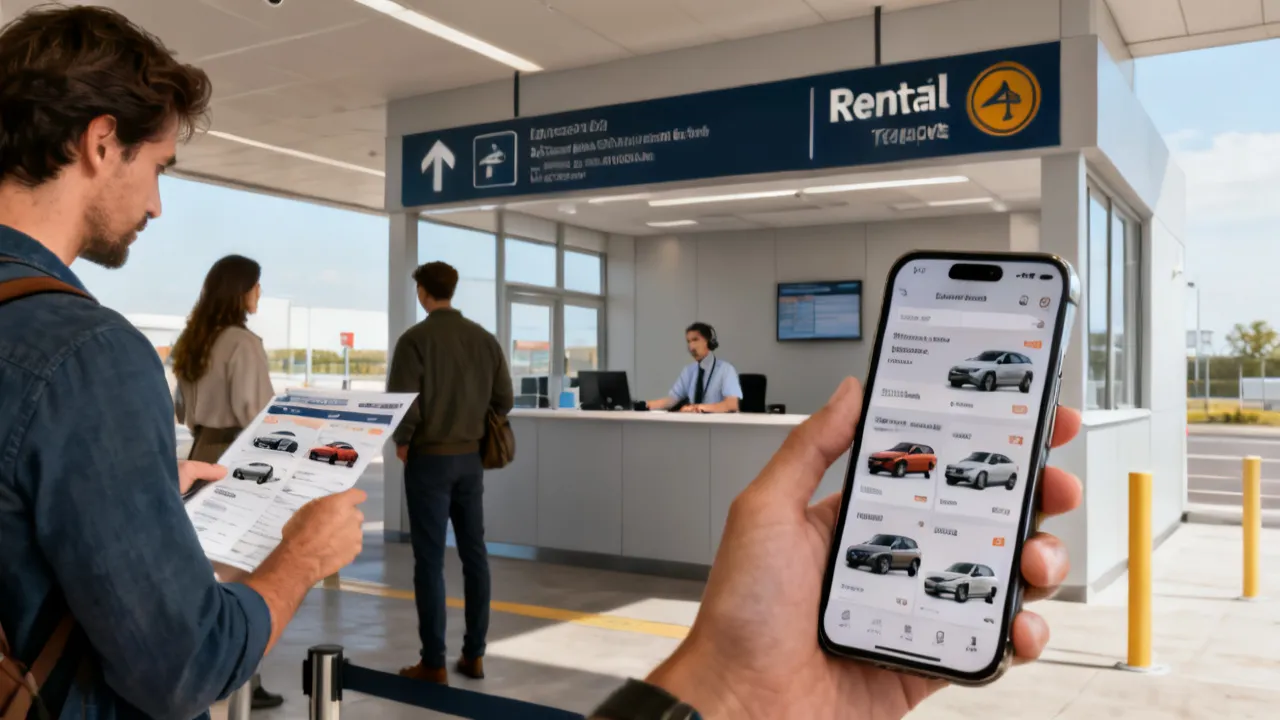
Vehicle Availability: Pricing, Suppliers, and Practical Steps
Vehicle Availability in the rental and mobility market determines how quickly customers can confirm delivery, lock in pricing, and match vehicles to trip needs. This guide explains how suppliers manage inventory, why rates move, and what to verify before booking. It also includes an objective comparison of practical options, clear requirements, and FAQs.

Vehicle Availability Guide for Smarter Fleet Planning
Vehicle availability determines whether deliveries, field work, and customer service can run on time. This guide explains how availability is measured, what typically limits it, and how suppliers and fleet managers can align schedules, maintenance, and demand. It also presents practical conditions, a decision framework, and expert-backed FAQs to reduce downtime.

Vehicle Availability: Expert Guide for Smart Planning
Vehicle availability is the key factor behind smooth rentals, fleet scheduling, and delivery commitments. This guide explains what “Vehicle Availability” means in practice, how suppliers manage inventory, what drives real-time supply, and how you can plan responsibly to reduce delays—using clear decision criteria, checklists, and requirements readers can apply across common vehicle categories.

Understanding Vehicle Availability for Smarter Sourcing
This guide explains how Vehicle Availability is assessed, confirmed, and managed when you’re sourcing cars through suppliers. You’ll learn objective ways to evaluate inventory readiness, lead times, and documentation requirements, plus practical decision criteria for buyers and fleet managers. Background context covers why real-world availability often differs from online listings.
