Binster Bt 185 is a specific industrial model people look up for procurement decisions, compatibility planning, and performance expectations. This guide explains, in an objective way, what buyers typically evaluate—specs, supplier reliability, documentation, and risk controls—so you can compare offerings and choose confidently based on verified information.
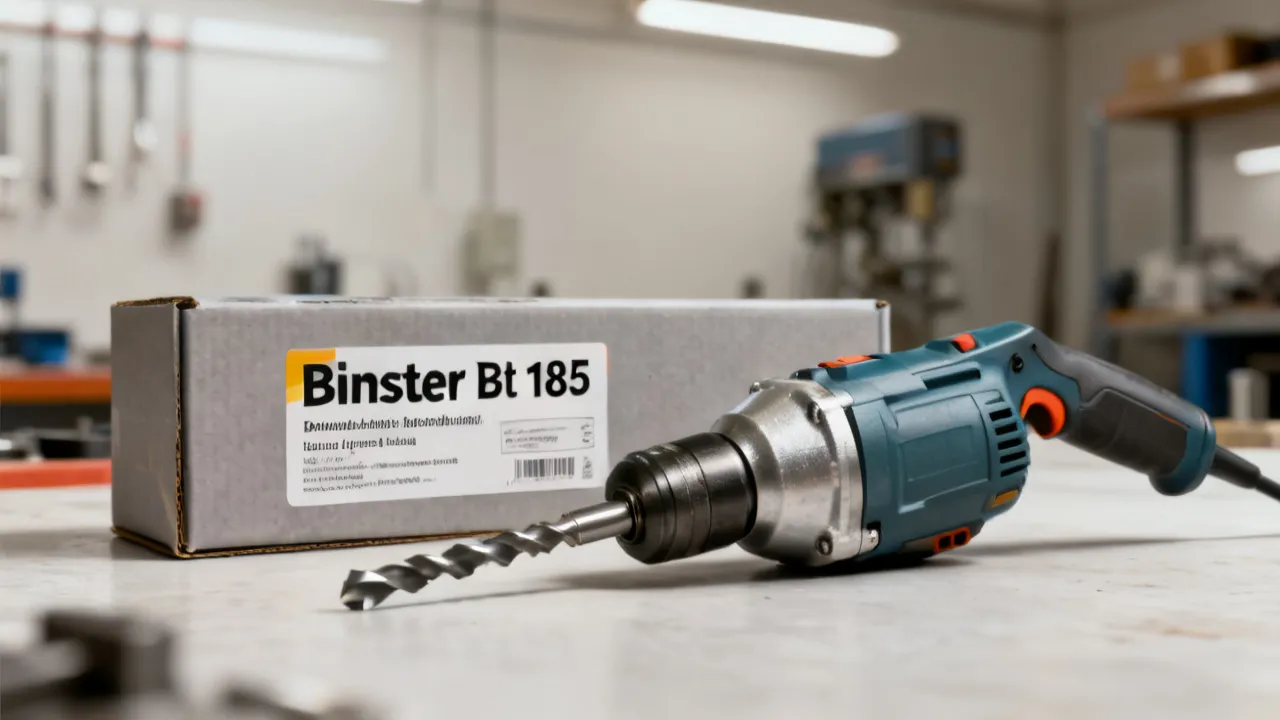
Binster Bt 185 buyers typically want two things first: (1) a clear match between the unit they plan to use and the unit they actually receive, and (2) a supplier relationship that can support documentation, spare parts, and practical installation guidance. Because model names are often reused across product revisions, the very important step is to verify the exact configuration, part numbering, and intended application before procurement decisions are finalized.
From an industry perspective, the purchase process should treat Binster Bt 185 as a controlled asset: confirm technical requirements early, request evidence of conformity (where applicable), and align warranty/return terms with your operational timelines. In practical terms, “top value” is not only about a listed price—it is also about reducing downtime risk, ensuring predictable maintenance, and avoiding late rework when the received unit differs from the spec sheet you expected.
To make this concrete, imagine the common failure mode in industrial procurement: a buyer sees a familiar model name in a catalog, requests a quotation, receives a unit that looks right at a glance, and then discovers—during commissioning—that the delivered configuration lacks a required interface module, uses a different control voltage, ships with a different accessory set, or comes with documentation that does not match the internal hardware revision. Each of those gaps can add days or weeks of schedule pressure, trigger expensive stop-work decisions, and create compliance questions during inspection. A “critical overview” therefore needs to go beyond basic purchasing steps and include a discipline for configuration verification, documentation completeness, and lifecycle support.
The phrase Binster Bt 185 functions as a model identifier used by buyers to locate a specific industrial product or configuration. In procurement, identifiers like this are often used to streamline searches across catalogs, distributor listings, and maintenance records. However, even when the model label is consistent, manufacturers and suppliers may ship different variants tied to revision levels, regional standards, bundled accessories, or interface packages.
Therefore, when you encounter Binster Bt 185 in supplier listings, you should read it as a starting point—not as the complete technical description. Your evaluation should focus on what the model includes (accessories, cables, mounting options, controllers, consumables), what standards it claims to meet, and which documentation accompanies the unit.
In many organizations, model identifiers serve multiple roles at once: they are shorthand for a bill-of-materials configuration, a reference for spare parts ordering, and a label for warranty coverage. That is why verifying the exact configuration is not just a technical step; it is also a commercial step that protects you from warranty disputes and maintenance mismatches later.
To avoid ambiguity, procurement teams often request the following “identity bundle” from the supplier for Binster Bt 185: (1) exact model number as printed on the unit or packaging label, (2) revision level or firmware/hardware revision (if the product includes software-controlled components), (3) complete included item list (sometimes called the “scope of supply”), and (4) serial number format and traceability references. If a supplier is unable to provide these items, you should consider whether they can actually support you through commissioning and lifecycle troubleshooting.
Many buyers ask for Binster Bt 185 price because cost is a key component of total procurement planning. Still, it is important to treat “price” as a conditional variable. Different suppliers may quote different bundles (standalone unit versus packaged system), different service levels (installation guidance, after-sales support), or different delivery terms (freight inclusion, warehouse lead time).
To stay objective, buyers should compare like-for-like. Ask suppliers to confirm whether the quotation includes: shipping/handling, taxes (if relevant), required adapters, installation kits, documentation (manuals, wiring diagrams, test certificates), and whether warranty coverage is the same across offers.
If you are comparing multiple offers, request itemized quotes rather than relying on a single number. In industrial buying, the “lowest price” can become the very expensive if it excludes critical components that are required for safe operation or compliance with internal procedures.
It can help to translate price into cost-of-ownership variables. For example, if Offer A is cheaper but excludes specialized cables and interface adaptors, you might later pay more for urgent shipping, pay engineering time to integrate mismatched parts, and face schedule delays. Conversely, Offer B might look higher on paper but include the exact accessories, the correct documentation set, and a support package that reduces commissioning time and accelerates acceptance testing. In regulated environments, the documentation bundle itself can be a hidden “cost driver,” because missing records can delay sign-off.
In addition to itemization, ask about price conditions that often surprise buyers: currency conversion handling, escalation clauses tied to material costs, restocking fees for returns, and whether expedited freight is available. If your installation window is tight, you should explicitly ask for lead time ranges and the supplier’s responsibility if a delay occurs.
When procurement is centered on Binster Bt 185, supplier reliability becomes as important as the product itself. Consider suppliers who can provide:
From an industry expert’s standpoint, the very useful supplier signals are not marketing claims but operational details: whether they can answer compatibility questions quickly, provide correct part numbers, and support troubleshooting without forcing you into guesswork.
Reliability can be assessed through both “paper signals” and “behavior signals.” Paper signals include: ability to provide itemized quotes with revision-level details; provision of a parts catalog reference; willingness to sign off on acceptance criteria; and clarity about which documents correspond to the shipped configuration. Behavior signals include: responsiveness to technical questions; clarity in communication during lead-time changes; and whether the supplier can participate in early commissioning discussions if issues arise.
One practical question to ask suppliers is whether they can provide the “maintenance viewpoint” of Binster Bt 185. For example: which parts are considered wear items, what the typical failure modes are, how often inspections should occur, and how long spare parts typically take to arrive. The supplier does not need to provide proprietary details, but they should at least demonstrate that they understand the operational lifecycle—not just the sales process.
Before you finalize a purchase, map Binster Bt 185 to your operational needs. A disciplined approach looks like this:
This is where many procurement mistakes happen: buyers focus on the unit name and overlook integration requirements. In industrial contexts, integration gaps lead to delays, additional tooling, and sometimes compliance issues during commissioning.
To do this effectively, procurement should coordinate with engineering and maintenance teams. A useful technique is to build a “technical requirements matrix” that lists your required interfaces (for instance, input voltage, signal types, communication protocol if relevant, mounting style, and any cable glands or environmental sealing requirements). Then, for Binster Bt 185, you confirm each matrix row with supplier documentation and—if possible—an integration review call or email exchange.
In addition, consider environmental conditions that can influence fit and expected performance: ambient temperature range, exposure to dust or moisture, vibration levels, electromagnetic interference, and any cleaning agents used at the site. If Binster Bt 185 is installed in harsh environments, the wrong accessory set (for example, an incorrect connector type or missing protective kit) can undermine safety margins and lead to premature failures.
Finally, reflect on duty cycle and operational patterns. A component rated for one level of continuous use might still function under heavier cycles but could see accelerated degradation. Buyers often assume “it works” is enough, but maintenance planning and warranty terms require a more careful alignment with actual operating conditions.
Even when the product appears straightforward, safe deployment depends on documentation and process controls. Ensure that for Binster Bt 185 you can obtain:
If your organization follows ISO-based or regulated procedures, incorporate the product into your internal documentation workflow. Treat the unit as an auditable item: the goal is traceability from purchase order through receipt, installation, and service records.
Documentation is not only for engineers; it is also a risk control for operational teams and auditors. In controlled environments, you want to answer questions such as: “Which unit revision did we install?” “What maintenance procedure was used?” “What acceptance test was performed?” “What warranty terms were active at the time of installation?” If those questions can’t be answered due to missing documentation, the procurement effort has created future friction.
When requesting documentation for Binster Bt 185, ask for the specific documents that correspond to the shipped revision. Avoid generic assurances like “manual will be included.” Instead, request document identifiers or version dates. For installation, ask whether the commissioning process includes any required checks, torque specifications, wiring validation steps, calibration procedures, or environmental seals verification steps.
Also consider whether conformity records or test certificates are needed. For certain industrial categories, internal standards may require conformity documentation, manufacturing test results, material certificates, or calibration certificates for components that measure or control critical parameters. If you suspect your environment is regulated, it is worth clarifying requirements at the procurement stage to avoid last-minute compliance gaps.
Use the table below to compare supplier offers and reduce mismatches. No links are included.
| Evaluation area | What to confirm for Binster Bt 185 | Why it matters |
|---|---|---|
| Model/variant verification | Exact model number, revision, included kit/accessories | Avoids receiving a configuration that cannot integrate with your system |
| Quoted scope | Standalone vs bundled components, installation accessories, documentation set | Prevents “price-only” comparisons that ignore essential extras |
| Price conditions | Incoterms/delivery terms, taxes, lead time, payment conditions | Improves budgeting accuracy and reduces procurement delays |
| Warranty and returns | Warranty duration, coverage exclusions, RMA process | Protects you during early-life defects or commissioning issues |
| After-sales support | Response channels, technical contact, escalation path | Reduces downtime during troubleshooting and maintenance |
| Spare parts availability | Common replacement parts, lead times, part-number traceability | Supports maintenance planning and continuity of operations |
| Compliance documentation | Any relevant test records, conformity statements, manual references | Supports internal audits and safe operating practices |
In many industrial categories, customer expectations evolve around reliability, documented performance, and serviceability rather than headline specifications alone. Organizations typically reduce risk by establishing procurement controls: standardized evaluation criteria, documented approvals, and clear acceptance tests at receipt or commissioning.
Although buyers search for “Binster Bt 185” to locate a product quickly, the operational reality is that suppliers can vary widely in transparency. Some provide full technical documentation and clear configuration details; others provide partial descriptions. This guide emphasizes traceability because it aligns with how industrial procurement teams manage uncertainty.
Traceability means you can link a physical asset to the purchasing decision that created it. In practice, that involves capturing: purchase order details, supplier references, shipped serial numbers, documentation versions, and installation acceptance records. When a product is part of a larger system, traceability also extends to how the asset interfaces with other components. This is why a procurement team should not treat the Binster Bt 185 decision as a purely commercial activity; it is an operational risk decision.
In quality management terms, traceability supports investigations if issues occur. If a performance issue appears, traceability helps you determine whether the root cause is a deployment mistake, a revision mismatch, a wiring error, a faulty accessory, or a defective unit. Without traceability, you risk time-consuming investigations with ambiguous conclusions and recurring problems.
Additionally, traceability supports long-term operations: if future maintenance requires replacement components, you need to know the exact configuration you originally purchased. Two units with the same label may have different internal parts. Maintenance teams need those distinctions to prevent further mismatch and to avoid creating new failure modes.
Below is a practical workflow you can apply whether you are purchasing for a small site or a multi-location operation.
To make the steps more actionable, you can add two extra operational checkpoints that many buyers overlook: (1) a “document readiness” checkpoint before installation, and (2) a “compatibility verification” checkpoint before parts are mounted or wired into your system. The document readiness checkpoint ensures the installation crew is not forced to proceed without the correct wiring diagrams or commissioning steps. The compatibility verification checkpoint ensures the physical and electrical interfaces match your system before you invest labor into installation.
Also consider whether you need a pilot installation or bench test. If the site is critical and commissioning risk must be minimized, you may be able to test Binster Bt 185 in a controlled environment using representative connections. This can reveal interface issues early and reduce commissioning surprises at the actual site.
To keep outcomes consistent, consider requiring suppliers to provide the following before you place an order for Binster Bt 185:
These conditions are not “extras”—they are operational necessities for controlled deployment.
To strengthen this checklist, many organizations add acceptance criteria that are phrased as “objective pass/fail.” For example, acceptance might require: (a) delivered unit serial number matches the serial number range quoted; (b) documentation includes the exact revision versions; (c) accessory pack includes specified items like mounting brackets, connectors, seals, or installation hardware; and (d) packaging labels match the ordered configuration. If any criterion fails, the unit should be held in quarantine until resolved.
Additionally, request clarity on where responsibility lies if issues arise due to configuration mismatches. If the supplier provided the specification and the wrong configuration is shipped, you want agreement that corrections will be handled without undue cost burden to your team. This should be captured contractually where possible.
Binster Bt 185 typically refers to a specific industrial model identifier used to locate a product configuration in supplier catalogs. Because “model names” can overlap across variants, you should confirm the revision and included kit details directly with the supplier.
In practice, it is helpful to treat this identifier like a key that unlocks a specific bill-of-materials configuration. The “model label” alone does not necessarily describe the full asset. For that reason, you should confirm the revision level and the exact scope of supply for Binster Bt 185.
Ask for an itemized quotation and compare the full scope: included accessories, documentation, freight/delivery terms, lead time, and warranty coverage. A “lower” number may reflect fewer included components or narrower support coverage.
One practical technique is to create a scoring sheet where each quote line item is categorized as “required for commissioning,” “required for compliance,” or “optional.” Then compare suppliers based on total cost for the required category first. Optional items can be compared second, or deferred if you plan to source them internally.
No. Treat the model name as an identifier that must be verified. Request exact configuration details (revision/variant), confirmation of included parts, and documentation that matches what you expect to install.
Also consider that product identifiers sometimes reflect different internal packaging bundles. Two units could share a model label but differ in connector types, cable lengths, or regional compliance labeling. Name-based assumptions can therefore lead to interface mismatches and commissioning delays.
Prioritize clarity on configuration, written warranty terms, after-sales technical support, and spare parts continuity. In industrial buying, these elements strongly influence lifecycle cost and downtime risk.
Beyond those basics, verify that the supplier can provide technical contacts and escalation pathways. If commissioning requires troubleshooting and a response is slow, downtime becomes the real “cost driver,” not the purchase price.
At minimum, you should expect user/installation documentation and maintenance references aligned to the shipped configuration. If your industry requires conformity records or test documentation, request those specific documents rather than assuming they exist.
When feasible, ask for document identifiers and version dates so you can confirm that the documentation corresponds to the exact revision you are receiving.
Plan early: confirm integration requirements, ensure documentation arrives before installation, schedule technical review with your internal team, and define acceptance checks for receipt. Delays often occur when accessories or interface components are discovered too late.
In addition, align your commissioning schedule with the supplier’s ability to support troubleshooting during the early operational window. Early-life defects and configuration issues are more likely to appear during commissioning than during routine operation, so support availability matters.
Not necessarily. Always request the warranty duration, exclusions, and the return/RMA process in writing, and make sure it matches your acceptance timeline and site commissioning schedule.
Pay attention to conditions that limit returns, such as missing packaging, documentation requirements, or restrictions on returns for units that have been installed or partially disassembled. If you anticipate commissioning might reveal configuration mismatches, clarify whether corrective action will be handled as a warranty claim or a replacement shipment.
Compatibility depends on operational conditions and the unit’s intended design constraints. Verify environmental and integration requirements with the supplier and your technical team rather than assuming all configurations behave identically.
Consider also whether accessories or installation practices must change depending on environment. For example, different sealing requirements might apply in wet, dusty, or high-vibration environments. If those differences are not addressed, the asset may “work” initially but fail prematurely.
Check model/revision identifiers, included accessories and documentation completeness, and physical condition of the unit. Record serial/model information for maintenance traceability and internal audits.
Also verify that packaging includes all labeled components and that accessory kits match the item list. For controlled assets, record the serial number in your asset register immediately upon receipt to ensure traceability across installation and maintenance records.
Many organizations align procurement controls with recognized standards and guidance such as ISO 9001 (quality management) and ISO 55000 (asset management). For risk and reliability concepts, reputable industry publications and standards bodies can provide additional frameworks.
Use these frameworks as references for structuring how you evaluate suppliers, manage documentation, and establish acceptance criteria. The specific technical requirements for Binster Bt 185 will still need to be confirmed using the supplier’s configuration details and your internal engineering standards.
For objective frameworks on supplier evaluation, quality management, and asset lifecycle thinking, the following sources are widely used in industry practice:
These references are provided as general procurement and quality frameworks; they are not specific to any single Binster Bt 185 configuration.
Where they matter in real procurement is not the standard name itself, but the behaviors they encourage: documented requirements, controlled acceptance, maintained traceability, and risk-based decision-making. When applied to a purchase like Binster Bt 185, those behaviors reduce the likelihood that the procurement choice will fail under operational pressure.
Even with a solid checklist, buyers sometimes run into issues because the “unknown unknowns” are not captured in standard procurement conversations. Below are additional considerations that can materially improve outcomes when evaluating Binster Bt 185.
Many quotations include hardware and documentation but omit “interfaces” that appear minor until commissioning. When evaluating Binster Bt 185, explicitly ask whether the scope includes:
When you ask for this explicitly, you reduce the probability that you will need to source missing items under time pressure. Time pressure often results in “temporary” substitutions that can become permanent maintenance problems.
A common procurement gap is that buyers confirm the product but not the commissioning pathway. Ask the supplier for an outline of the commissioning steps and the expected acceptance tests. This can take the form of a checklist or a high-level procedure that references their manual.
Why this matters: acceptance tests define what “successful commissioning” means. If you do not align on acceptance criteria before purchase, you might later face disputes about whether a problem is due to installation or due to the supplier’s hardware.
Acceptance tests should be objective wherever possible. For instance, they could include:
Some industrial products require configuration parameters—either set during commissioning or loaded through a software interface. If Binster Bt 185 involves parameter settings, ask:
This matters for lifecycle management. If you cannot retrieve configuration later, maintenance becomes guesswork and can lead to inconsistent performance across sites.
Spare parts continuity often appears as a general promise. Buyers should instead turn it into a procurement deliverable by asking for:
Why this matters: if you do not plan spares at purchase time, you may later face longer lead times exactly when the asset is failing in operation. Planning spares is part of risk control, not a “nice-to-have.”
Warranty terms can be written in ways that sound straightforward but become difficult during real commissioning. Evaluate the warranty in practical terms:
For buyers of Binster Bt 185, it is wise to align warranty start with acceptance milestones. If warranty starts at delivery but commissioning occurs months later, you could lose coverage for early operational failures.
After-sales support is often described qualitatively. Buyers should push for operational specificity. When evaluating Binster Bt 185 offers, request:
Even if the supplier cannot commit to a specific service level, ask them to outline what they can do. The goal is to avoid being left without guidance when troubleshooting begins.
Buyers sometimes request documentation but do not control delivery timing. If installation requires documentation before work begins, request that documentation be delivered in advance of shipment (or at least before arrival).
When documentation is delayed, crews may proceed without correct wiring diagrams or commissioning procedures. That can lead to rework, safety concerns, and schedule impacts. In procurement terms, documentation delivery timing is as important as the documentation content.
Receipt checks should be more than a superficial inspection. Define a quarantine procedure: if Binster Bt 185 does not match the purchased configuration, the unit should not be installed.
In practice, a quarantine procedure includes:
This reduces installation errors and ensures that any mismatch is resolved before your team invests labor into integration.
If your organization buys Binster Bt 185 for multiple locations, you should standardize the configuration and acceptance criteria across sites. Otherwise, you might accidentally purchase different revisions or bundles for different locations even if the model label looks identical.
To standardize, maintain a “golden configuration record” that includes:
Then, require any supplier quote for Binster Bt 185 to explicitly match that golden record or to document deviations and their implications.
Industrial components can become obsolete or receive revision changes over time. While your immediate goal is purchase and commissioning, procurement planning should also consider whether Binster Bt 185 is at risk of discontinuation.
Ask suppliers:
This planning affects long-term maintenance costs. If a model is nearing discontinuation, procurement might decide to buy additional spares upfront or plan a controlled migration to a replacement configuration.
Even after a successful commissioning, downtime risk can persist if maintenance teams do not have a clear plan. For Binster Bt 185 procurement, consider aligning:
If training or workshops are available, ask about them during procurement. A well-designed support package can reduce the time needed to recover from faults and can improve the accuracy of maintenance interventions.
When you search for Binster Bt 185, the goal should be more than locating a listing—it should be building a procurement decision that survives real-world integration and maintenance. Confirm the exact configuration, compare fully itemized offers rather than relying on a single Binster Bt 185 price figure, and evaluate supplier support and documentation quality as first-class criteria.
If you approach the purchase with traceability, documented requirements, and clear acceptance conditions, you reduce downtime risk and improve predictability across commissioning and the lifecycle of your assets.
Ultimately, the most “critical” part of evaluating Binster Bt 185 is ensuring that the unit you buy is the unit you can install, support, and maintain without ambiguity. That requires a tight link between procurement paperwork and operational reality—especially in industries where revisions, bundles, and interface kits can change while model names remain familiar.
Striking the Perfect Balance: Navigating Premiums and Out-of-Pocket Expenses in Senior Insurance Plans

Explore the Tranquil Bliss of Idyllic Rural Retreats

How to Make Lasting Memories at Disneyland Attractions

Affordable Phones and Plans for Seniors

Affordable Full Mouth Dental Implants Near You

Unlock the Top Kept Secrets to Finding Your Ideal Dentist for Flawless Dental Implant Results!

Discovering Springdale Estates

Unveiling RS Sul Telecom Services

The Guide to Car Trading


Navigating Retirement Planning with Confidence
Approaching retirement brings a mix of excitement and concern. Finding the right retirement advisor is crucial for a secure and comfortable future. This guide offers practical advice on selecting an advisor, understanding their roles, and becoming financially astute yourself.
Binster Bt 185: Buyer’s Guide and Market Analysis
Binster Bt 185 is a specific industrial model people look up for procurement decisions, compatibility planning, and performance expectations. This guide explains, in an objective way, what buyers typically evaluate—specs, supplier reliability, documentation, and risk controls—so you can compare offerings and choose confidently based on verified information.

Posic Ebserh: How to Understand Your Options
Posic Ebserh helps people navigate healthcare-related planning and service access with clarity. This guide explains the core meaning and context behind the terms, then offers an objective framework for evaluating programs, responsibilities, and practical next steps. It also highlights what to prepare before contacting a supplier or healthcare coordinator, using neutral criteria and local sensitivities.

Using NotebookLM Effectively for Smarter Knowledge Work
This guide explains how NotebookLM can support structured note-taking and efficient knowledge work, from organizing sources to improving retrieval and writing workflows. Background context covers what NotebookLM is, why notebook-style systems matter, and how professionals commonly evaluate accuracy, privacy, and reliability when working with AI-assisted research tools.
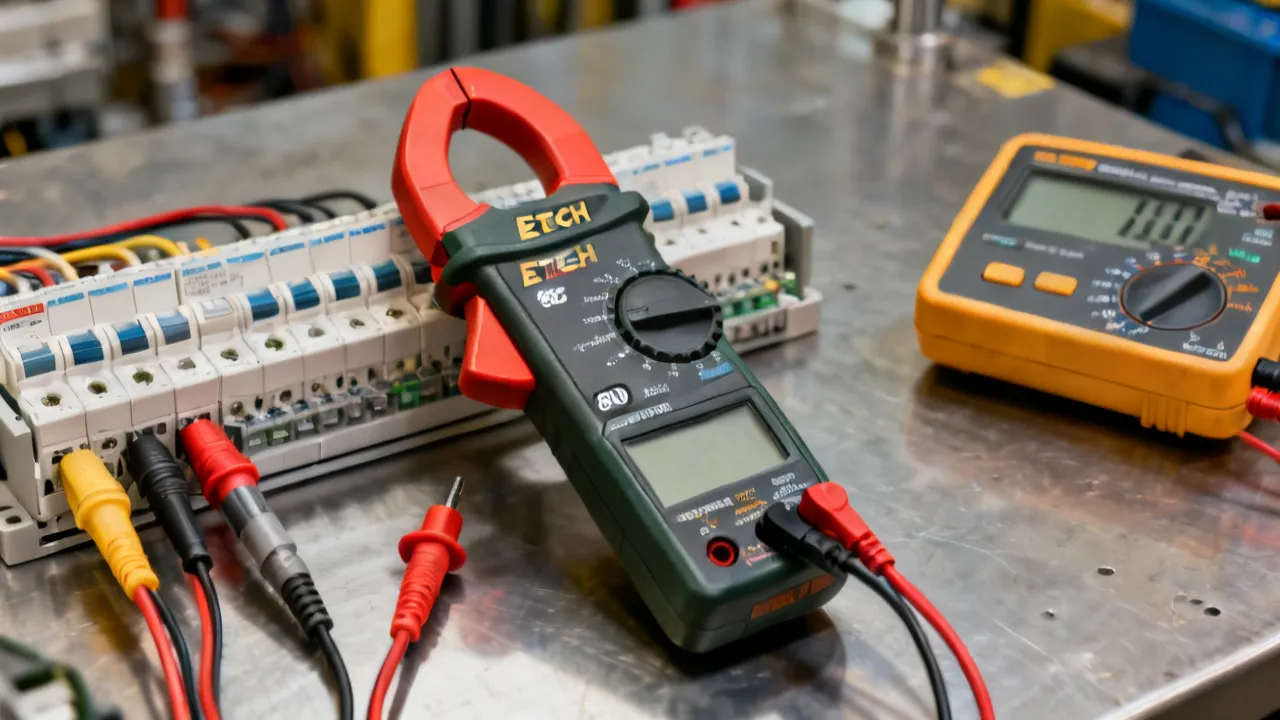
Extech EX800: A Practical Measurement Guide
This guide explains how to evaluate and use the Extech EX800 series of clamp meters for electrical troubleshooting, maintenance, and current measurement. The EX800 designation refers to a family of Extech instruments whose exact capabilities vary by model, so users should confirm the model number, measurement category, jaw rating, and manual before testing. The article covers operating principles, safety, accuracy, maintenance, selection criteria, and common questions.
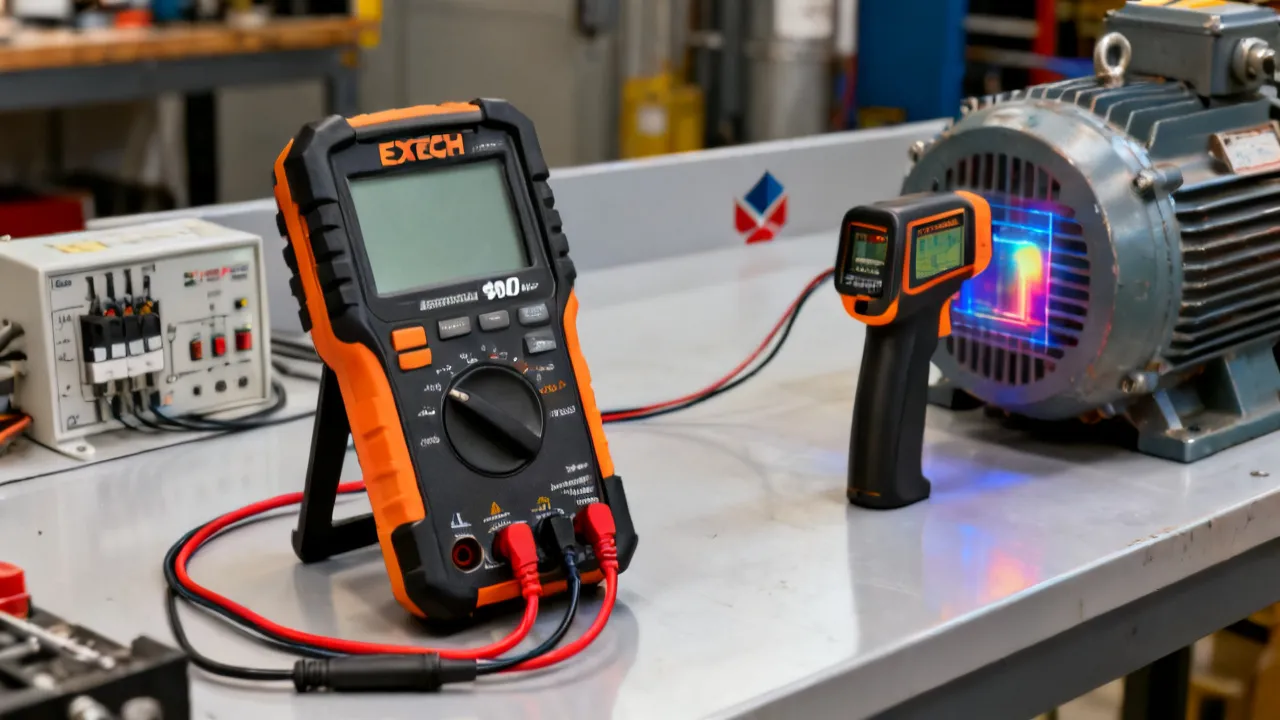
Extech EX900: A Practical Measurement Guide
This guide explains how the Extech EX900 can support electrical testing, troubleshooting, and temperature checks when used within its rated limits. The instrument is an industrial digital multimeter associated with functions such as voltage, current, resistance, continuity, frequency, capacitance, and infrared temperature measurement, depending on configuration and documentation. Its usefulness depends on correct lead placement, category ratings, environmental conditions, calibration status, and safe measurement procedures rather than on the number of available functions alone.
